A new study published in Cell identifies a specific liver-derived molecule produced during exercise (an “exerkine”) that improves brain health in mice. The researchers believe it may protect the brain by improving blood vessel function — an exciting discovery in brain health, Alzheimer’s disease research, and healthy aging.
This article covers the background, the study, and what it means for preventing dementia and supporting long-term cognitive health.
What are “exerkines” and how do they relate to brain health?
We have long known that exercise is critical for overall health, including brain health. Physical inactivity is linked to obesity, diabetes, stroke, hypertension, and osteoporosis, and is one of the modifiable risk factors for dementia. Exercise, on the other hand, is associated with a lower risk of dementia, slower cognitive decline with age, and delayed onset of dementia. It can improve cognitive functioning and brain structure, including white and gray matter.
Exactly how exercise affects brain health has been more difficult to understand. More recently, scientists discovered that exercise triggers the release of signaling molecules called exerkines. These molecules travel through the blood and affect distant organs, including the brain. They’ve been shown to improve insulin sensitivity, reduce blood pressure, lower cancer risk, and improve physical performance.
Earlier research identified several key exerkines that influence the brain:
- Irisin improves memory
- Cathepsin B enhances memory functions of the hippcampus
- Clusterin reduces brain inflammation
Most early studies focused on the production of exerkines from muscle. However, exerkines are produced by many tissues in response to exercise. Newer research shows that liver exerkines play a major role in the benefits of exercise for the brain.
This shift led scientists to explore the liver–brain connection in aging and Alzheimer’s disease.
Exerkines are signaling molecules (peptides, metabolites, nucleic acids) released by various tissues — such as muscle, liver, and fat — into circulation in response to acute or chronic exercise. They act as messengers spreading the health benefits of exercise throughout the body.
Study overview: exercise, liver signals, and brain health
The latest research was led by Dr. Saul Villeda of the Department of Anatomy at the University of California, San Francisco. This research team previously reported in Science that blood plasma from exercised mice improved the cognitive performance of sedentary aged mice. Thus, the positive effects of exercise were transferred to older mice. The scientists also found that increasing a liver exerkine called GPLD1 (glycosylphosphatidylinositol–specific phospholipase D1) in aged mice improved age-related cognitive impairments. The level of GPLD1 was also higher in healthy, active older human adults.
Building on this body of work, the 2026 Cell study tested whether the liver-derived exerkine could improve cognitive decline. The researchers studied three groups of mice: aged mice with natural memory decline, Alzheimer’s disease model mice, and young, healthy mice as controls.
The study involved the following phases:
- Mice exercised using running wheels.
- Scientists analyzed blood to find exercise-induced liver molecules.
- They identified a key liver exerkine called GPLD1.
- They gave this molecule to sedentary mice.
- They tested memory, brain health, and blood vessel function.
- They also used genetic tools to confirm how the molecule works in the brain.
Key finding: reversing memory loss by preserving the blood-brain barrier
The research study made significant progress in understanding how liver-produced molecules after exercise improve brain health.
Improved brain blood vessel function
The exerkine GPLD1 did not act directly on neurons in the brain. Instead, it improved the brain’s vascular system. It worked by maintaining the blood-brain barrier, a protective shield for the brain’s blood vessels to keep out harmful molecules. The barrier becomes “leaky” as we age, resulting in inflammation. This finding is important because vascular dysfunction is a major contributor to dementia.
- GPLD1 produced stronger blood–brain barrier integrity.
- Blood vessels showed improved performance.
- Treatment reduced vascular damage.

Memory improvement in mouse models of aging and Alzheimer’s
- Aged mice regained cognitive function.
- Alzheimer’s model mice performed significantly better on memory tests and reversed amyloid beta pathology.
These results suggest a potential way to reverse age-related memory loss. In fact, the treated mice showed new brain neuron development.
A new liver–brain connection
The study supports a simple but powerful pathway:
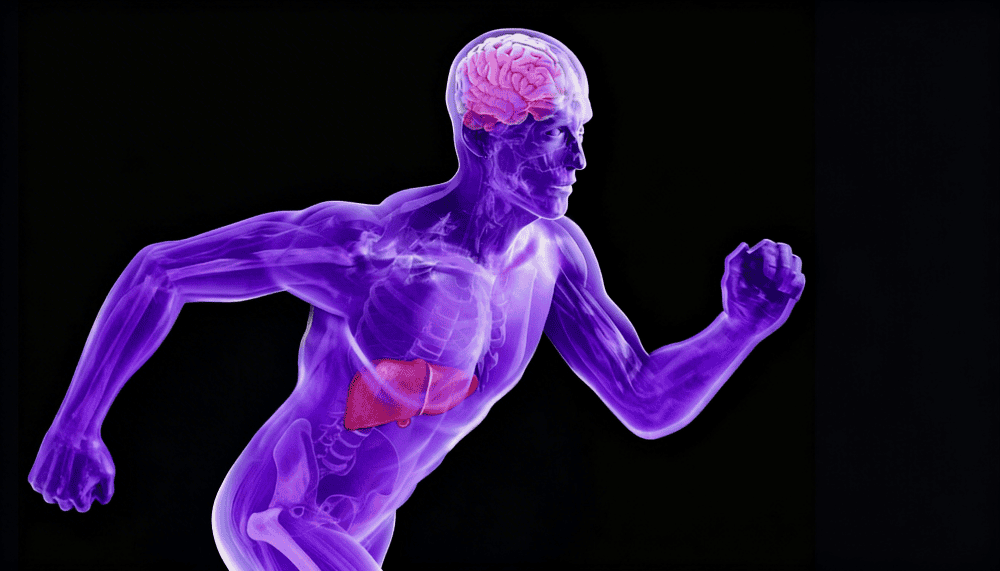
Exercise → liver releases exerkine → improved brain blood vessels → better memory
What this means for humans
Although the study used mice, the implications for human brain health are significant.
- New Alzheimer’s treatment targets: Scientists may be able to develop drugs that mimic exercise-induced exerkines. These treatments could help slow or reverse Alzheimer’s disease, treat age-related cognitive decline, and support people who cannot exercise.
- Vascular health is brain health: This research reinforces a key message: Healthy blood vessels are essential for preventing dementia. Protecting vascular function may be as important as targeting brain cells.
- Exercise works at the molecular level: Exercise is not just beneficial — it’s biologically powerful. It triggers the release of molecules that directly improve brain function.
What researchers are studying next
The field of exercise science and brain health is advancing quickly.
Scientists are now working to:
- Identify more exerkines from liver and muscle.
- Understand how these molecules work together.
- Develop exercise-mimicking therapies.
- Test these findings in human clinical trials.
How to protect brain health now
While exerkine-based therapies are still in development, people can take proven steps today.
- Stay physically active through regular exercise to support brain health. Walking, cycling, and swimming are great aerobic exercises, and consistency matters more than intensity.
- Support cardiovascular health to maintain healthy blood vessels and reduce dementia risk. Keys include controlling blood pressure, managing cholesterol, maintaining healthy blood sugar, and avoiding smoking.
- Build brain-healthy habits to protect cognition, such as getting enough sleep, staying mentally active, and maintaining social connections.
To learn more about reducing the risk of dementia and Alzheimer’s disease, review our articles on this topic and see our Alzheimer’s Prevention webpages.