Learn about pulsed electromagnetic field therapy with this explainer video:
PROJECT
Enlarged Prostate
in Dogs
PET HEALTH
PROJECT
Enlarged Prostate in Dogs
PET HEALTH
Project summary

Pulsed electromagnetic field (PEMF) therapy provides an effective, noninvasive treatment for enlarged prostate in older male dogs. The procedure is safe, applied for only a few minutes each day at home, and avoids complications and anesthesia related to surgery.
Overview
Background
- Enlarged prostate, or benign prostatic hyperplasia (BPH), is common in older dogs.
- BPH sometimes causes bloody urine and can even obstruct the colon, resulting in constipation.
- Current treatment is surgical castration or medication.
Key points
- A non-surgical treatment method for enlarged prostate would improve welfare, reduce surgical complications, and provide a treatment option for dogs that cannot undergo surgery or anesthesia. This is especially important for the older dogs that often suffer from enlarged prostate.
- A study using a PEMF (pulsed electromagnetic field) device showed that a simple, noninvasive treatment could reduce the size of the prostate gland in dogs by more than 50% in just a few weeks!
- This procedure could replace surgery as a treatment option for most older dogs suffering from BPH.
Parsemus's role
- Parsemus Foundation supported research on the use of pulsed electromagnetic field (PEMF) therapy for dogs suffering from enlarged prostate.
- The results of the study were impressive, and this treatment could provide a non-invasive method to treat BPH in dogs.
- We encourage veterinary clinics to invest in PEMF devices, which could be used in the clinic or in the client’s home.
Topics


Highly effective noninvasive treatment for benign prostatic hyperplasia
The prostate gland produces seminal fluid. Older male dogs commonly have enlarged prostate or BPH (benign prostatic hyperplasia). There is little difference from humans in anatomy, physiology and symptoms of this disease (see our page on enlarged prostate in men). It is more common in intact dogs, but there is no clear reason why it affects some male dogs and not others. The most common clinical sign of BPH in dogs is bloody fluid dripping from the penis not associated with urination. In severe cases it can obstruct the colon and result in constipation. Treatment in dogs usually involves castration or medication.
Simple and effective treatment for enlarged prostate in dogs
The Parsemus Foundation sponsored a study by Dr. Raffaella Leoci (Italy) to investigate a non-invasive treatment in dogs with BPH. The method used in the study to treat dogs was pulsed electromagnetic field therapy (PEMF). PEMF is a noninvasive method that generates both an electrical and magnetic field (but no heat) and is used in orthopedics, neurology, and urology. It has been reported to have an anti-inflammatory effect and increases healing and blood circulation. The idea of using this method for BPH is to improve prostate blood flow and reduce the size of the prostate gland.
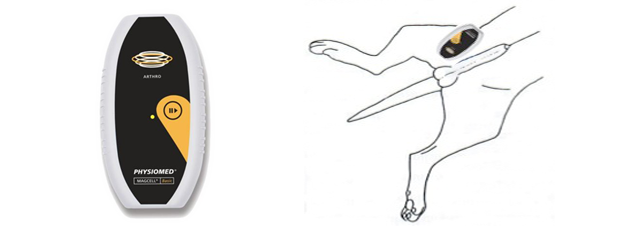
The study used a Magcell® Vetri
device from Physiomed
Elektromedizin AG, Germany
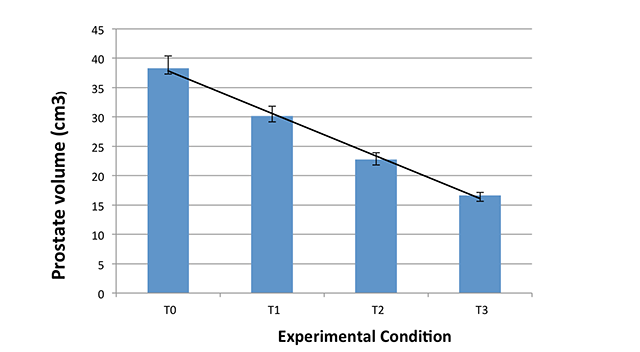
Decrease in prostate volume in 20 dogs treated with pulsed electromagnetic field therapy. T0=baseline, T1-T3=weeks 1-3 after treatment. Prostate volume was significantly lower than baseline at each week of treatment.
Take Action on Enlarged
prostate in dogs
The positive effects of PEMF on BPH in dogs, with no side effects, supports its use as a noninvasive, simple and effective treatment, and may be the best option if your dog cannot tolerate sedation and surgery. If your dog has been diagnosed with BPH by your veterinarian, ask if PEMF is a treatment option. Some veterinarians may not be familiar with the procedure — so feel free to share the scientific publication and this website information. The PEMF device used is portable and available for purchase (see Additional Resources). Veterinarians may offer to rent the portable device to clients for in-home use.
Veterinarians offering alternative methods of contraception
For Pet Owners
Looking for a veterinarian willing to perform procedures beyond surgical spay or neuter? Browse our directory of qualified veterinary professionals.
Veterinarian
Directory
For Veterinarians
Do you offer alternative methods of contraception like ovary-sparing spay and vasectomy? Join our referral directory so new clients can find you.
Additional resources
Scientific publications
See our searchable bibliography for a complete library of scientific publications on our projects.
Key publications on enlarged prostate in dogs:
- Leoci R, Aiudi G, Silvestre F, Lissner E, Lacalandra GM (2014). Effect of pulsed electromagnetic field therapy on prostate volume and vascularity in the treatment of benign prostatic hyperplasia: A pilot study in a canine model. The Prostate. (Free text) Press release on EurekAlert
PEMF Devices
PEMF device used in study: Magcell Vetri by Physiomed Elektromedizin in Germany.
- UK distributor: Physio Equipment
- US distributor: Kismet Holdings Group
Email: info@magcellvetri.com
www.magcellvetri.com
Tel: 423-313-6157
Frequently Asked Questions:
enlarged prostate in dogs
Symptoms and Identification
Q: What are the signs that my dog has an enlarged prostate?
A: Because the prostate sits right against the rectum and urethra, symptoms are often related to “straining.” Common signs include:
- “Ribbon-like” stools: The enlarged gland presses against the colon, flattening the feces as they pass. This may be accompanied by straining to defecate.
- Urinary changes: Straining to urinate or frequent, small amounts of urine. You may see drops of blood on the floor or bedding.
- The “John Wayne” gait: Some dogs walk with a stiff, wide-legged hind limb movement because the enlarged gland causes discomfort in the pelvic region.
Q: How common is BPH in dogs?
A: It is almost universal in aging intact males. Research shows that 80% of intact male dogs over the age of six have some degree of BPH, and that number rises to nearly 95% by age nine. Even dogs as young as two can show early signs of the condition.
Q: Is an enlarged prostate in a dog the same as BPH in men?
A: They are very similar but have one key anatomical difference. In humans, the prostate tends to grow inward, compressing the urethra early on and causing mostly urinary issues. In dogs, the prostate usually grows outward. This is why dogs often experience more gastrointestinal symptoms (like constipation) before they show severe urinary blockage.
Treatment Options
Q: Does my dog have to be neutered to treat BPH?
A: Traditional neutering (castration) is the most common treatment because it removes the source of testosterone, causing the prostate to shrink by about 70% within a few weeks. However, it is not the only option. For owners who wish to keep their dog’s hormones intact for other health reasons (see our Hormone-Sparing page), there are alternatives.
Q: What are the non-surgical alternatives to neutering for canine BPH?
A: Anti-androgen medication and PEMF therapy are effective options for BPH in dogs.
- Finasteride: A medication that blocks an enzyme (5-alpha-reductase) that changes testosterone to another hormone that causes the prostate to grow. It shrinks the prostate without lowering overall testosterone levels.
- Pulsed Electromagnetic Field (PEMF) Therapy: A non-invasive treatment that uses electromagnetic waves to reduce inflammation and prostate size. Research supported by the Parsemus Foundation has shown this can be highly effective with zero side effects.
Q: Where can I get a PEMF device for treating enlarged prostate?
A: PEMF devices are usually large and may be expensive. However, some companies produce handheld devices that are appropriate for treatment of canine BPH. The Magcell by Physiomed was used in the study on dogs.
Last updated on September 10, 2026