Learn the basics of hormone-sparing sterilization with our new Hormone-sparing Sterilization explainer video:
PROJECT
Hormone-Sparing
Sterilization Projects
PET HEALTH
PROJECT
Hormone-Sparing
Sterilization Projects
PET HEALTH
Promoting choice for optimal pet health
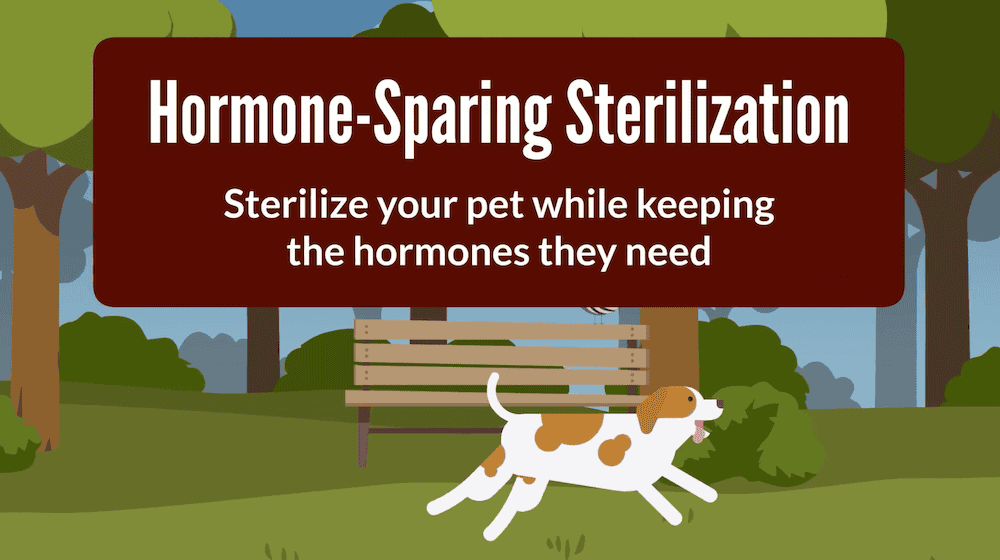
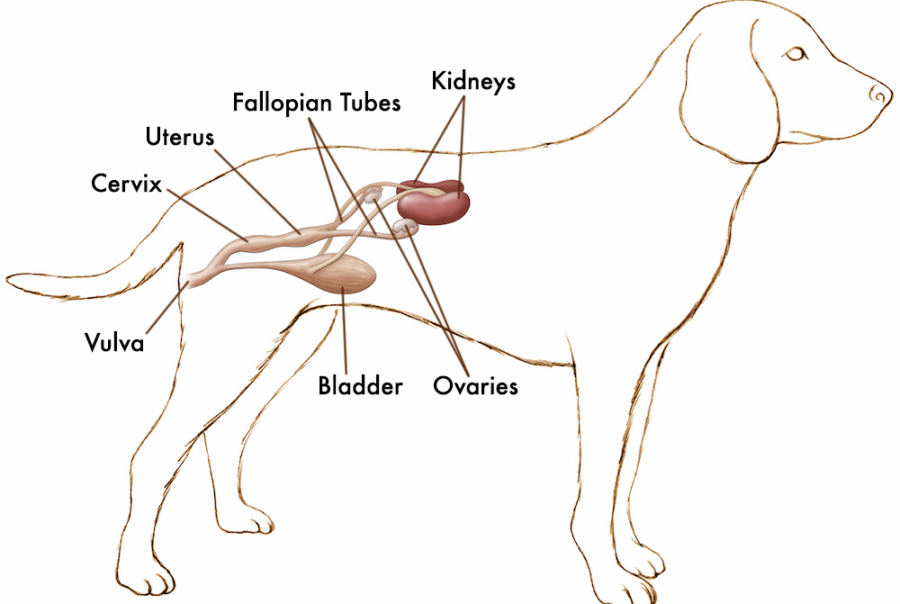
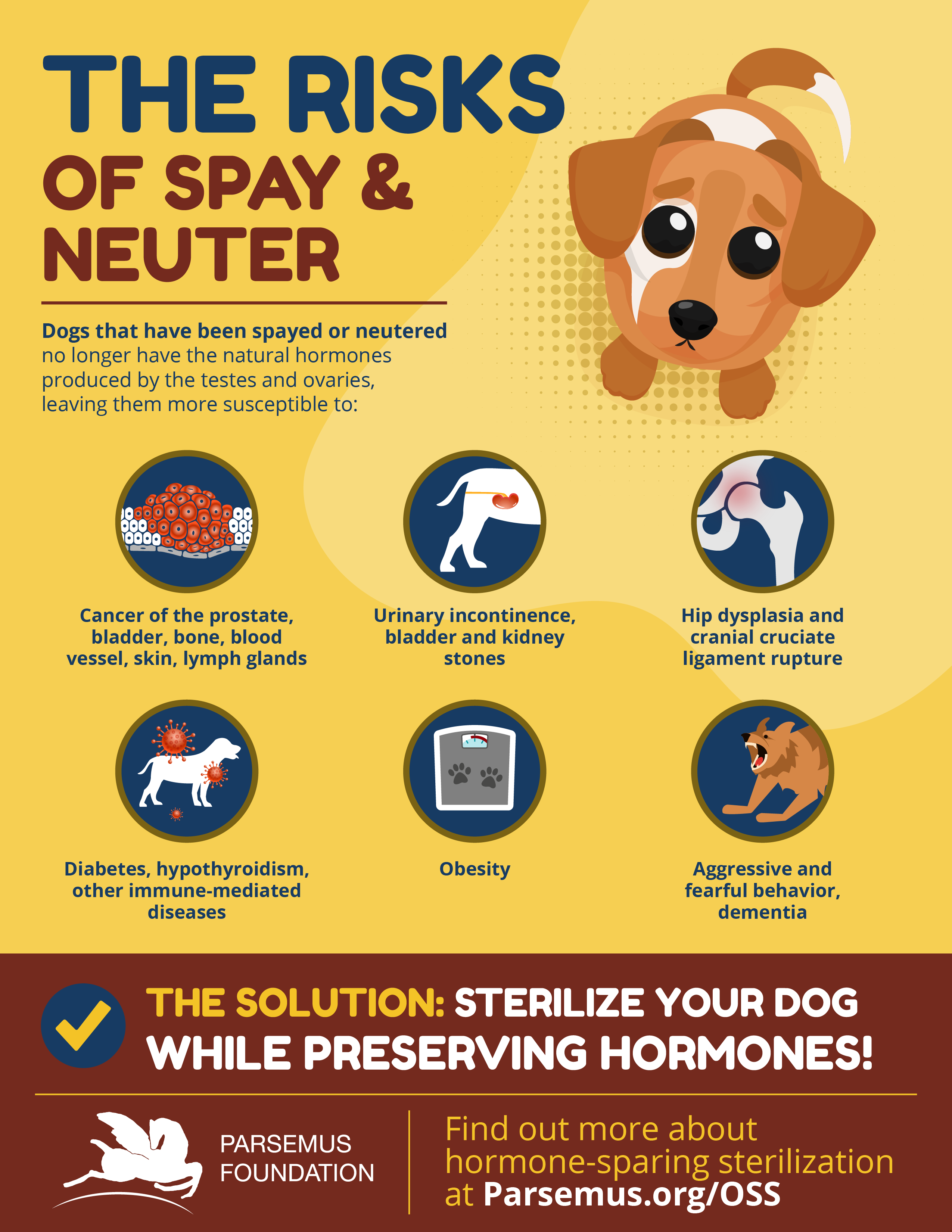
Spaying and neutering pets to reduce pet overpopulation is standard veterinary practice, and usually involves removal of the sex organs to sterilize the animal. More recent research on dogs has shown that the lack of natural hormones resulting from spay or neuter can lead to other serious health complications. Hormone-sparing methods — like hysterectomy (also called ovary-sparing spay) for females and vasectomy for males — are ways to sterilize pets without the negative impacts from hormone loss.
When it comes to the question of whether, when, and how to sterilize pets, we encourage individualized decision-making to reduce risks and enhance benefits for the dog.
Handy resources
- 2024 review! WSAVA guidelines for the control of reproduction in dogs and cats
- Is Spay and Neuter Really the Best Choice for Your Dog? Experts Speak Out
- Infographic on the risks of spay and neuter
- For veterinarians: publication on performing hysterectomy or vasectomy
- Veterinarian Directory listing providers of hormone-sparing sterilization
- An informational flyer for veterinary websites or use as a handout for clients
Seeking information on hormone therapy for dogs? See hormone restoration in dogs.
When it comes to the question of whether, when, and how to sterilize pets, we encourage individualized decision-making to reduce risks and enhance benefits for the dog.