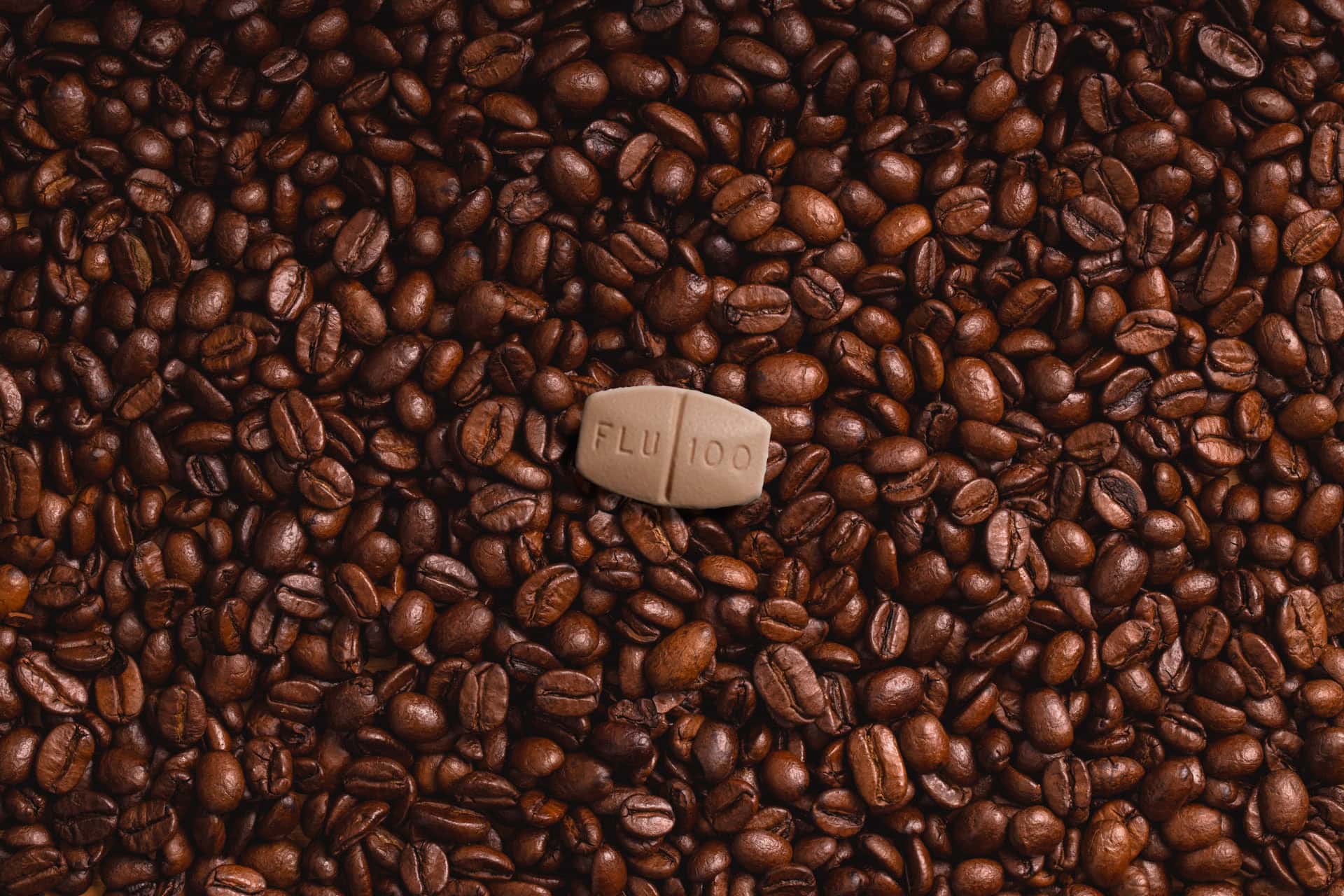
Many people take fluvoxamine, also known as Luvox, for obsessive-compulsive disorder (OCD) or depression. Many people also consume caffeine every day, and the combination can cause real problems.
The key message is simple: fluvoxamine and caffeine don’t mix well. Understanding why can help you avoid unnecessary side effects.
Why the fluvoxamine-caffeine interaction matters
Caffeine is the most common psychostimulant used by people around the world. Most of us associate caffeine with coffee and tea, but it’s also found in energy drinks, sodas / soft drinks, energy bars, chocolate (especially dark), and other foods. Caffeine is a central nervous system stimulant.
Caffeine can be problematic for individuals taking fluvoxamine, a common antidepressant classified as an SSRI (selective serotonin reuptake inhibitor). Over 28 million individuals have taken fluvoxamine for depression or OCD, and likely, many don’t know about the interaction with caffeine.
Fluvoxamine vs. fluoxetine
Note that while fluoxetine (Prozac) sounds similar to fluvoxamine, fluoxetine uses a different metabolic pathway and does not interact with caffeine in the same way.
Fluvoxamine affects how your body processes certain substances. It’s a potent inhibitor of the liver enzyme CYP1A2, which breaks down many drugs in the body, including caffeine. The result is a significant slowing of caffeine metabolism.
So instead of lasting hours, caffeine can linger for more than a day. Each additional serving of caffeine builds on what remains. Side effects often follow.
In addition to caffeine remaining in the body longer due to fluvoxamine’s effect, researchers have found that the interaction reduces the liver clearance of fluvoxamine. This may prolong the effect of fluvoxamine, although further research is needed to clarify the impact.
Common fluvoxamine-caffeine interaction symptoms
People who take fluvoxamine often report headaches, nausea, anxiety, and insomnia. The symptoms closely resemble caffeine overstimulation. People feel jittery, restless, or unable to sleep. Some feel sick without understanding why.
Many assume fluvoxamine alone causes these symptoms, which can lead them to stop taking it unnecessarily. They don’t realize that caffeine may play a role. Clear information can prevent that outcome.
Individual differences increase risk
People metabolize caffeine differently; some are sensitive to small amounts, while others tolerate it more easily.
Fluvoxamine magnifies these differences. Slow caffeine metabolizers face the highest risk. Family history often provides helpful clues. If you’re not sure, it’s safe to start by assuming you metabolize caffeine slowly.
If caffeine disrupts your sleep normally, take extra caution. Fluvoxamine may intensify that effect several times over.
Practical steps for safer use
Public awareness about the interaction between caffeine and fluvoxamine is critical. Talk to your healthcare professional about limiting caffeine intake if you’re prescribed fluvoxamine. Your physician may counsel you to avoid or reduce caffeine when starting fluvoxamine.
Track any symptoms you experience, so you can adjust your caffeine intake as needed. Discuss your concerns with a knowledgeable healthcare provider.
Many people, including some clinicians, overlook this interaction. If you know someone who has been prescribed fluvoxamine, share this information.
Further reading
- Truong, Jenny, et al. “An Exploration of the Interplay Between Caffeine and Antidepressants Through the Lens of Pharmacokinetics and Pharmacodynamics.” European Journal of Drug Metabolism and Pharmacokinetics 50.1 (2025): 1-15.
Excerpt: The interaction between fluvoxamine and caffeine resulted in increased concentrations of caffeine in the body and lowered the renal clearance of fluvoxamine.
- Culm‐Merdek, Kerry E., et al. “Fluvoxamine impairs single‐dose caffeine clearance without altering caffeine pharmacodynamics.” British journal of clinical pharmacology 60.5 (2005): 486-493.
Highlights: At 200 mg/day, fluvoxamine prolonged caffeine’s elimination half-life (4.9 vs. 56 h). Caffeine produced CNS-stimulating effects compared with placebo. Issues were not seen with a single dose of caffeine but cannot be ruled out with accumulation from daily ingestion.
- Rasmussen, Birgitte Buur, Torben Leo Nielsen, and Kim Brøsen. “Fluvoxamine is a potent inhibitor of the metabolism of caffeine in vitro.” Pharmacology & toxicology 83.6 (1998): 240-245.
Excerpt: The formation of 1,7-dimethylxanthine was virtually abolished by 10 pM of fluvoxamine, indicating that the N3-demethylation of caffeine is almost exclusively catalysed by CYPlA2.
- Jeppesen, Unni, et al. “A fluvoxamine-caffeine interaction study.” Pharmacogenetics and Genomics 6.3 (1996): 213-222.
Excerpt: Our data clearly point to the possibility of caffeine intoxication during fluvoxamine treatment. Caffeine intoxication during fluvoxamine treatment could be a disregarded adverse effect leading to discontinuation of the drug.