At the Parsemus Foundation, we champion low-cost, evidence-based health solutions. A 2025 systematic review published in Brain, Behavior, and Immunity Integrative provides exciting evidence for a simple, fermented drink: kefir. This study highlights how kefir might slow neurodegeneration and improve life for those with Alzheimer’s disease.
The influence of diet on Alzheimer’s disease
Our diet directly affects obesity, high blood pressure, high cholesterol, and other conditions that are related to poor health outcomes. The foods and supplements we take are also intimately connected to our brain. In fact, diet is one of the modifiable risk factors that we can control to significantly reduce the chance of getting Alzheimer’s or dementia.
Preventing the development of Alzheimer’s disease is critical, and researchers are finding more interactions between our diet and health (see our articles on Alzheimer’s prevention).
The connection between the gut and the brain
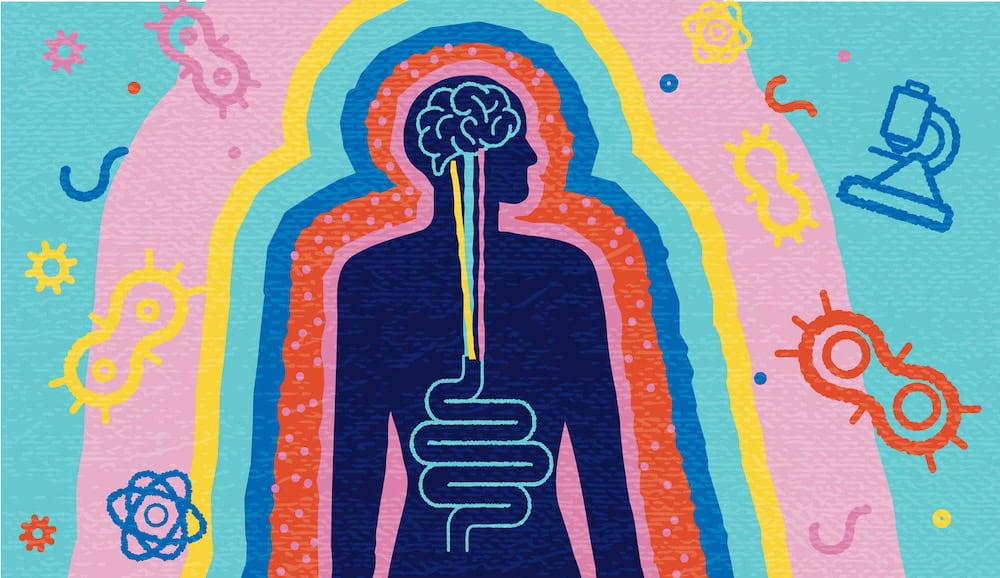
Your gut and brain stay in constant contact through the “gut-brain axis.” This bidirectional communication happens via nerves, the immune system, and the bloodstream.
When gut bacteria become unbalanced — a state known as dysbiosis — it triggers body-wide inflammation. This “leaky” environment allows inflammatory markers to reach the brain, where they activate immune cells called microglia. Overactive microglia contribute to the hallmark damage seen in Alzheimer’s disease. By supporting a healthy gut, we may be able to stop the negative cascade starting in the stomach.
Fermented foods have been important in human diets for centuries and include kefir, yogurt, miso, natto, tempeh, and kombucha. They have the potential to positively affect the gut microbiome and the gut-brain axis. A 2026 review concluded that consuming fermented foods and their polyphenol-rich derivatives has been shown to positively affect brain health, with the potential to slow the progression of neurodegenerative and mood disorders.
Kefir: the super-charged probiotic
Kefir is a probiotic fermented drink made from “kefir grains,” which are a complex community of bacteria and yeast. This symbiotic relationship makes kefir unique. Beyond probiotics, kefir is rich in bioactive compounds like B vitamins, choline, and folic acid — all of which are essential for maintaining healthy neurons.
Kefir produces “kefiran” — a prebiotic that supports gut microbiota growth, and produces immunomodulatory, anti-inflammatory, antimicrobial, and antioxidant properties. Kefir supplementation supports the synthesis of many neurotransmitters (such as adrenaline, dopamine, serotonin, and norepinephrine) and their receptors. Neurotransmitters are important for communication among the neurons in the brain.
How kefir may influence Alzheimer’s disease
The 2025 review article evaluated existing research about the effects of kefir on brain health, including cognitive function, neurodegeneration, and oxidative stress. The authors concluded that kefir shows promise as a potential treatment for Alzheimer’s disease, offering neuroprotective benefits due to its anti-inflammatory and antioxidant properties.
- Reducing toxic proteins: In animal models, kefir helped clear amyloid-beta plaques. These “sticky” proteins build up in the brains of Alzheimer’s patients and disrupt cell function.
- Fighting oxidative stress: Kefir acts as a natural antioxidant. It reduces “reactive oxygen species” that damage brain cells and lead to cell death.
- Boosting memory and cognition: The review highlighted a 90-day clinical trial in which Alzheimer’s patients drank kefir daily. These patients showed improvement in memory, visual-spatial/abstraction abilities, and executive/language functions. The authors concluded that the effect was due to reductions in systemic inflammation, oxidative stress, and blood cell damage.

Where is research needed on kefir for Alzheimer’s?
While these results are very promising, the scientific community still has work to do. Standardized kefir formulations and large-scale clinical studies are needed to validate its therapeutic potential for human patients.
- Larger human trials: Most current evidence comes from animal models or very small human groups. We need large-scale clinical trials to confirm these benefits.
- Standardization: Different kefir grains produce different results. Researchers need to standardize kefir formulations so doctors can recommend specific “doses.”
- Long-term impact: We need to see if kefir can truly prevent the onset of Alzheimer’s over many years, rather than just manage current symptoms.
Kefir is an accessible, affordable “functional food.” It offers a low-risk way to support brain health through the gut. While it is not a cure-all, science suggests that a daily glass of kefir could be a powerful addition to an Alzheimer’s prevention or treatment plan.
Learn more about the Parsemus Foundation’s projects on Alzheimer’s prevention.