Key points
- Some neutered male dogs suddenly attract unwanted sexual attention from other male dogs. A new trial asks whether deslorelin (Suprelorin brand) reduces attractiveness in these dogs.
- In a small, double-blind trial of 30 dogs, significantly more of the Suprelorin-treated dogs had a reduction in unwanted attention compared to the placebo group.
- The implant lowered luteinizing hormone (LH), a hormone that increases after neutering. It did not lower follicle-stimulating hormone (FSH).
- If this problem affects your dog, this research may help you start a conversation with your veterinarian.
Pet health news
Click here for more details on the effect of spaying and neutering in dogs.
Neutering, hormones, and unwanted attention
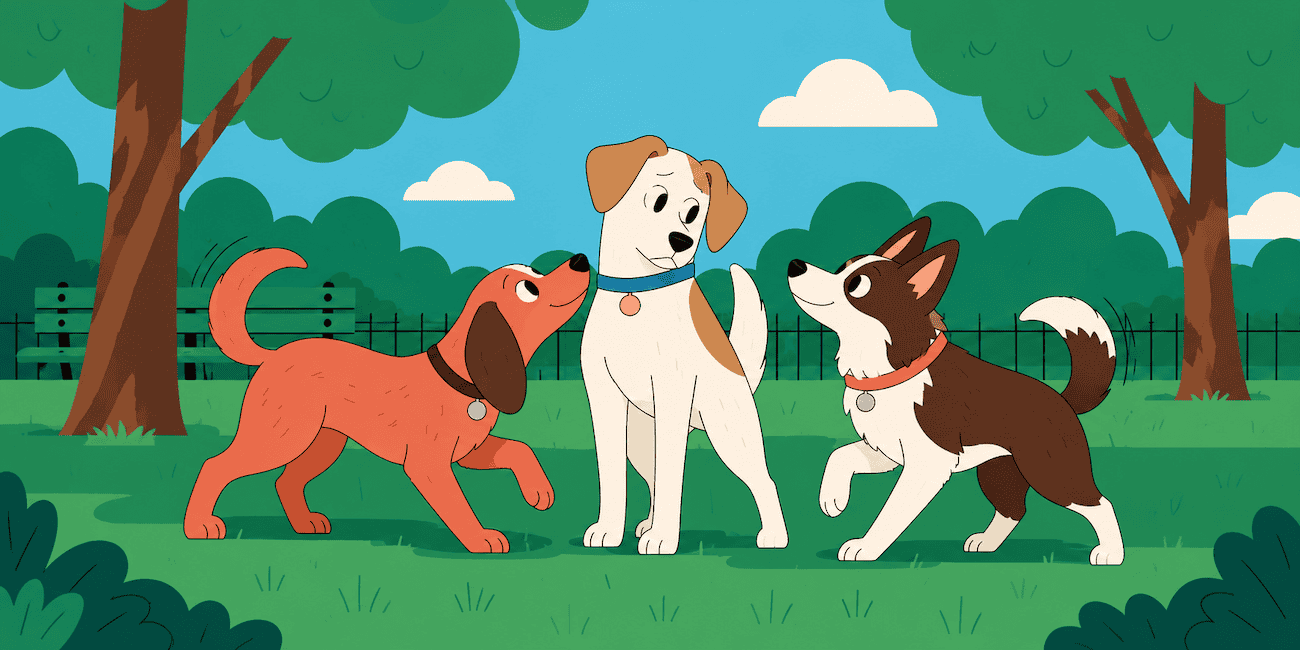
Picture a calm, neutered dog at the park. Within minutes, other male dogs surround him. They sniff, lick, chase, and try to mount him. His owner has no idea why this started after he was neutered.
Veterinarians see this problem regularly, and owners often describe it as sudden. Earlier studies suggest that about 6% to 8% of neutered male dogs draw sexual interest from other males. For the targeted dog, this attention can be stressful. Over time, it may lead to fear or fights with other dogs.
Neutering changes more than fertility
Neutering does much more than prevent puppies. Removing the testicles changes a dog’s hormones for life. Research links neutering to a higher risk of cancers, joint disorders, and other health problems. Several studies also suggest that neutered dogs may become more fearful or more aggressive. Many of these findings depend on the dog’s breed, age, and size, and plenty of questions remain.
Unwanted sexual attention is one of those open questions. Only a handful of studies, plus a single case report, have looked at it. Scientists do not yet know what causes it.
Two possible explanations: hormones and pheromones
One theory for unwanted sexual attention in neutered dogs involves hormones. In an intact dog, the testes form part of a “feedback loop” where adequate testosterone inhibits the secretion of hormones from the brain’s pituitary gland to reduce further testosterone production. Two of these signaling hormones are luteinizing hormone (LH) and follicle-stimulating hormone (FSH). After neutering, testosterone levels drop to near zero. Without testosterone as a brake, LH and FSH then stay high for the rest of the dog’s life. Some experts even call this “LH disease.”
LH and FSH receptors sit in the skin, brain, bladder, and other tissues. So high levels may affect the body well beyond reproduction.
A second theory involves pheromones. These chemical signals help dogs communicate, including to indicate sexual interest. Hormone changes after neutering might alter a dog’s scent signals. However, scientists have not yet identified the specific canine sex pheromones involved.
What the Suprelorin study set out to test
A team from Freie Universität Berlin, the University of Zurich, and the drug maker Virbac tested whether a hormone implant could help. The implant, Suprelorin, contains a drug called deslorelin. Veterinarians often use it as a temporary, reversible form of chemical castration in intact male dogs. Deslorelin first stimulates, then shuts down, the brain signals that trigger LH and FSH release.
The team had two goals. First, they wanted to know whether Suprelorin reduces attractiveness in neutered males that other dogs target. Second, they wanted to confirm that the implant lowers LH and FSH in these dogs. They published their results in 2026 in the journal Theriogenology.
Here’s how the study worked:
- Study type: A double-blind, randomized, placebo-controlled trial. Neither owners nor veterinarians knew which implant each dog received.
- Dogs: 30 healthy, privately owned, neutered male dogs of many breeds and sizes. The team enrolled them between 2020 and 2022.
- Who qualified: Dogs at least 1 year old, neutered at least 3 months earlier. Their owners had reported strong, repeated sexual interest from other males.
- Treatment: 15 dogs got a 4.7 mg Suprelorin implant under the skin between the shoulder blades. The other 15 got an identical implant with no active drug (a placebo).
- Behavior tracking: Owners completed the same questionnaire at about 1 month, 3 months, 6 months, and 9 months after implantation.
- Blood tests: Veterinarians measured LH and FSH before treatment, at about 1 month, and at 9 months.
Main findings: Suprelorin reduces attractiveness in many dogs
Less unwanted attention, decreasing over time
Owners of treated dogs reported improvement early. Within 30 to 45 days, 10 of the 15 Suprelorin owners noticed less sniffing, mounting, or chasing from other males. Some saw changes as early as day 10. By 6 months, 11 of the 15 treated dogs had improved, and all 11 remained improved at 9 months. In the other 4 treated dogs, unwanted attention continued but happened less often.
The placebo group also improved at first. Of the 15 owners, 5 reported positive changes within 1 month. That number slipped to 3 by 9 months.

Across the whole study, treated dogs had about five times the odds of improving compared with placebo dogs. That is a large effect, and it is unlikely to be due to chance alone. A larger study would help to fine-tune the impact of Suprelorin.
The gap between groups also grew over time. At 1 and 3 months, the difference was too small to rule out chance. At 6 and 9 months, the Suprelorin group clearly did better.
LH dropped, but FSH did not
Before treatment, the dogs had high LH levels, as expected after neutering. In the Suprelorin group, LH fell to very low, baseline levels within about a month. By 9 months, LH had started to rise again in three treated dogs. In the placebo group, LH did not change.
FSH told a different story. It stayed high in both groups for the whole study. So, while Suprelorin normally reduces both LH and FSH when it is used as a contraceptive for intact dogs, the results of this study for neutered dogs showed no impact on FSH.
What the authors say about Suprelorin
The authors call Suprelorin a promising option for this hard-to-treat problem. They note that the benefit built up gradually within individual dogs. In two dogs, improvement only appeared after 6 months. That delay means owners and vets may need patience and realistic expectations.
The placebo group’s early improvement surprised the researchers. Owners hoping for change may notice it, even without a drug. This placebo effect weakened the study’s ability to detect differences. It also shows why behavior studies need a placebo group.
“As a veterinarian, I find it particularly rewarding when research can improve the lives of dogs and their owners. Although unwanted sexual attention from intact males towards neutered male dogs appears to be relatively uncommon, it can be very distressing for those affected. Our findings suggest that deslorelin implants may offer a promising treatment option, potentially improving the quality of life for both dogs and their owners.”
—Johanna Leber
Veterinarian, Research Associate, Doctoral Candidate
Dept. of Veterinary Medicine, Freie Universität Berlin

Does high LH cause attractiveness?
The study shows two things. Suprelorin lowered LH, and treated dogs drew less unwanted attention. But it does not show that lower LH caused the change. The authors found no clear link, dog by dog, between LH levels and behavior. Something else may explain Suprelorin’s effect, such as changes in skin chemistry or scent production. Larger, controlled studies will help to clarify whether high LH causes increased sexual attraction for some neutered dogs.
Several other limits matter too. Owners’ reports can be subjective, and other causes of attraction could have occurred. The authors also flag open safety questions for long-term deslorelin use and the need for additional dosing data for neutered dogs. We also noted that Suprelorin’s maker funded the study, and several authors were employed by the company.
Why this matters for veterinarians
Even with these limits, the trial gives veterinarians something new. Until now, they had little research to guide treatment for this problem. This randomized trial suggests that a single Suprelorin implant may help many affected dogs. When needed, the authors suggest pairing it with behavior support, such as controlled social exposure or behavior counseling.
Suprelorin’s impact on hormones is important to consider when restoring hormones in spayed and neutered dogs to improve lifelong health. Suprelorin and the sex hormones testosterone or estrogen are often supplemented for dogs that show signs of spay-neuter syndrome (see more on hormone restoration in dogs). In this study, Suprelorin reduced LH over 9 months but did not affect FSH, which is relevant when treating neutered dogs.
Take-home message: Suprelorin reduces attractiveness
Neutering does far more than sterilize a dog. It reshapes his hormones for life, and those changes can affect his health and behavior. Unwanted sexual attention from other males is one example that research has largely overlooked.
This early trial suggests Suprelorin reduces attractiveness in many affected neutered dogs. The reduction in LH levels may explain this effect, and more research will help clarify these findings. Results also varied from dog to dog, and some improvements took months to appear.
Did other male dogs start targeting your dog after neutering? If so, consider bringing this publication to your veterinarian’s attention. Together, you can decide whether Suprelorin suits your dog’s situation.
To learn more, visit our page on how spaying and neutering affect health.