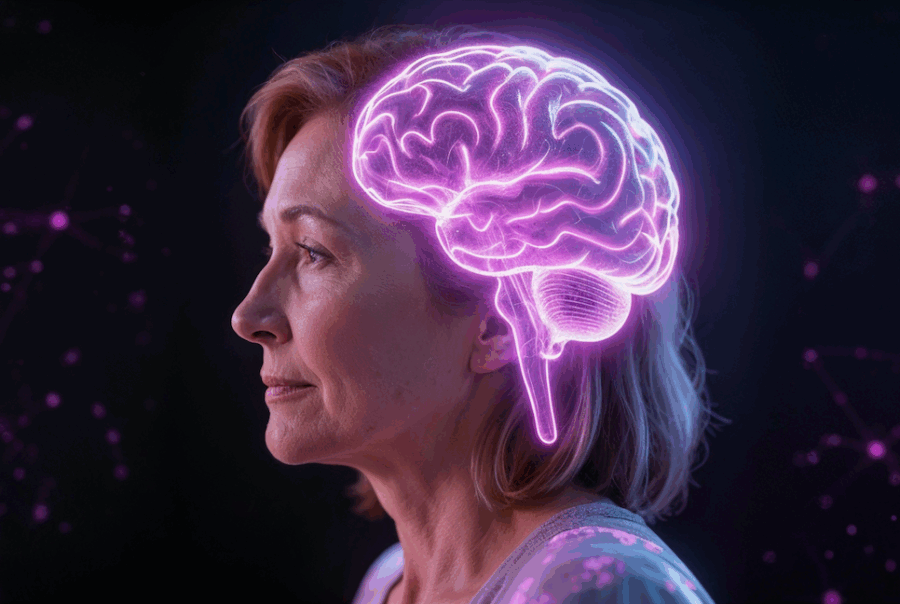
Lithium and the brain

Recent studies indicate that even trace amounts of lithium salts may have positive effects on the brain. For example, a 2020 review found evidence for a protective effect of lithium from public drinking water and lower suicide mortality at the population level. A 2025 study reported that lithium levels are significantly lower in the brains of people with Alzheimer’s or mild cognitive impairment and mice fed a diet deficient in lithium showed brain signs of Alzheimer’s which were reversed when provided with lithium orotate. Evidence is mounting for lithium’s antisuicidal, antiviral, immunomodulary, and neuroprotective effects, including for Alzheimer’s disease prevention.


Background

  • Lithium is a trace element that is found in the cells of most plants and animals and is naturally present in the environment.
  • Lithium is often considered a mood stabilizer. It has been used to treat psychiatric illness since the 1870’s and is now best known for the treatment of bipolar disorder.

Key points

  • Lithium protects the brain from injury and neurodegeneration. It appears to limit some of the key pathological processes related to Alzheimer’s disease in animal models.
  • In epidemiological studies in humans, therapeutic doses as well as trace amounts of lithium in drinking water were related to lower rates of dementia. A study in Texas showed that trace levels of lithium in drinking water were related to reduced deaths from Alzheimer’s disease, as well as lower levels of obesity and type 2 diabetes due to lithium’s effects on insulin activity.
  • Research on lithium and Alzheimer’s disease is at an early stage. There is some evidence for a slowing of cognitive decline in clinical trials of lithium treatment, although it may be more relevant as a preventative than treatment of Alzheimer’s.

Parsemus' role

  • The Parsemus Foundation has advocated for more focus on prevention of Alzheimer’s disease and dementia.
  • A research project supported by the foundation is studying the impact of lithium orotate on a mouse model of Alzheimer’s disease
The Project in Detail

Lithium protects the brain from injury and neurodegeneration. In experimental studies in animals, lithium appears to limit some of the key pathological processes related to Alzheimer’s disease. In epidemiological studies in humans, therapeutic doses as well as trace amounts of lithium in drinking water were related to lower rates of dementia. A study in Texas reported that trace levels of lithium in drinking water were related to reduced deaths from Alzheimer’s disease, as well as lower levels of obesity and type 2 diabetes due to lithium’s effects on insulin activity.

Additional support for the benefits of lithium for brain health come from a 2025 study published in Nature.  The brains of mice fed a lithium-deficient diet had signs of Alzheimer’s disease or dementia: increased amyloid plaques, tau pathology, myelin loss, neuroinflammation, synaptic damage, and memory impairments. Conversely, adding lithium orotate to the diet reversed many of these Alzheimer’s like changes.

Animal and cellular studies support lithium’s ability to reduce amyloid plaques, maintain neuronal integrity, improve memory, and decrease neuroinflammation. Lithium may protect against Alzheimer’s disease by reducing apoptosis, inflammation, and oxidative stress; activating neuroprotective cellular processes; and inhibiting glycogen synthase kinase 3 (GSK3) which is related to Alzheimer’s pathology.

Research on lithium and Alzheimer’s disease in humans is at an early stage. Meta-analysis of several clinical trials supplementating with other lithium compounds reported that they did not significantly delay cognitive impairment  in individuals with mild cognitive impairment or Alzheimer’s disease. Randomized clinical trials of lithium orotate are needed to determine if this lithium salt is more effective as has been found in mouse models.

Lithium carbonate is a lithium salt that has been used to treat bipolar disorder and depression. It appears to have neuroprotective properties and has been the subject of studies on the prevention and treatment of diseases like Alzheimer’s. Unfortunately, lithium carbonate has a narrow therapeutic range and a number of serious side effects — including toxic impacts on the thyroid and kidneys.

Another lithium salt — lithium orotate — may provide an alternative with fewer side effects. Lithium orotate studies in the 1970s found that it was superior to lithium carbonate in crossing the blood-brain barrier and in entering cells. However, a 1976 study raised the potential for increased renal toxicity of high-dose lithium orotate, which limited continued study.

Research is now underway to determine if lithium orotate can be used to treat bipolar disorder at a lower — and less toxic — dose than lithium carbonate. Importantly, lithium orotate has reduced binding with brain amyloid, making it more active in the brain. Lithium orotate is now widely available as a supplement, and it appears to be effective, safe, and well-tolerated. Lithium orotate has only recently been fully characterized, and more research — especially clinical trials — will be needed to determine its long-term safety.

Dieting,Or,Good,Health,Concept.,Young,Woman,Rejecting,Junk,Food

We know that diet and lifestyle factors are related to the development of Alzheimer’s disease. Stress, lack of exercise, a typical Western diet and decreased lithium levels are all factors likely contributing to the pathology of Alzheimer’s disease. For example, scientists have found that high levels of sugar in the diet are related to elevated glucocorticoids (such as cortisol). This results in processes that can damage the brain, including inflmamation and an insulin-resistant brain state.

To best understand how lithium salts may impact Alzheimer’s disease, Dr. Lane Bekar of Saskatchewan University has developed a mouse model with a genetic predisposition to the disease. The mice are provided a high sugar diet to mimic the human condition.  Lithium orotate is being evaluated to determine if it has a protective effect on the brain. To date, the results have not been conclusive although research is ongoing.

The Parsemus Foundation is supporting research on the ability of lithium to prevent neurodegeration, memory loss, and Alzheimer’s disease.

Learn more about dementia and Alzheimer’s disease — and what you can do to lower your risk. Prevention is key, and there are modifiable risk factors that you can do something about today, such as diet, exercise, and appropriate supplements. General information as well as scientific publications are listed below.

Studies and papers

  • Aron L, Ngian ZK, Qiu C, et al. Lithium deficiency and the onset of Alzheimer’s disease. Nature. 2025;645(8081):712-721. doi:1038/s41586-025-09335-x
  • De-Paula VDJR, Radanovic M, Forlenza OV. Lithium and neuroprotection: a review of molecular targets and biological effects at subtherapeutic concentrations in preclinical models of Alzheimer’s disease. Int J Bipolar Disord. 2025;13(1):16. doi:1186/s40345-025-00386-7
  • Devadason P. Is there a role for lithium orotate in psychiatry? Aust N Z J Psychiatry. 2018;52(12):1107-1108. doi:1177/0004867418810185
  • Fajardo VA, Fajardo VA, LeBlanc PJ, MacPherson REK. Examining the Relationship between Trace Lithium in Drinking Water and the Rising Rates of Age-Adjusted Alzheimer’s Disease Mortality in Texas. Grant W, ed. JAD. 2017;61(1):425-434. doi:3233/JAD-170744
  • Kessing LV, Gerds TA, Knudsen NN, et al. Association of Lithium in Drinking Water With the Incidence of Dementia. JAMA Psychiatry. 2017;74(10):1005. doi:1001/jamapsychiatry.2017.2362
  • Kishi T, Matsunaga S, Saito Y, Iwata N. Lithium for Alzheimer’s disease: Insights from a meta-analysis. Neuroscience & Biobehavioral Reviews. 2026;180:106458. doi:1016/j.neubiorev.2025.106458
  • Memon A, Rogers I, Fitzsimmons SMDD, et al. Association between naturally occurring lithium in drinking water and suicide rates: systematic review and meta-analysis of ecological studies. The British Journal of Psychiatry. 2020;217(6):667-678. doi:1192/bjp.2020.128
  • Pacholko AG, Bekar LK. Lithium orotate: A superior option for lithium therapy? Brain and Behavior. 2021;11(8):e2262. doi:1002/brb3.2262
  • Pacholko AG, Wotton CA, Bekar LK. Poor Diet, Stress, and Inactivity Converge to Form a “Perfect Storm” That Drives Alzheimer’s Disease Pathogenesis. Neurodegener Dis. 2019;19(2):60-77. doi:1159/000503451
  • Pereira Da Silva AM, De Deus O, Ribeiro FV, et al. Efficacy and Safety of Lithium for Behavioral and Cognitive Symptoms in Alzheimer’s Disease Dementia: A Systematic Review With Frequentist and Bayesian Meta-Analysis. The American Journal of Geriatric Psychiatry. Published online October 2025:S1064748125004968. doi:1016/j.jagp.2025.10.001
  • Radanovic M, Singulani MP, De Paula VDJR, Talib LL, Forlenza OV. An Overview of the Effects of Lithium on Alzheimer’s Disease: A Historical Perspective. Pharmaceuticals. 2025;18(4):532. doi:3390/ph18040532
  • Rybakowski JK. Antiviral, immunomodulatory, and neuroprotective effect of lithium. J Integr Neurosci. 2022;21(2):68. doi:31083/j.jin2102068
  • Vlachos GS, Scarmeas N. Dietary interventions in mild cognitive impairment and dementia. Dialogues in Clinical Neuroscience. 2019;21(1):69-82. doi:31887/DCNS.2019.21.1/nscarmeas

Many urologists have no knowledge of PEMF. I have full body PEMF mat, I have been lying on the mat for 30 minutes per day, in three weeks I have noticeable improvement in my BPH symptoms, reduced my bathroom visits by 50%.

Anonymous,June 2024

The electromagnetic treatment from the PEMF device produced a significant reduction (average 57%) in prostatic volume in three weeks of treatment.

Leoci et al.2014

The efficacy of PEMF (pulsed electromagnetic field therapy) on BPH in dogs, with no side effects, suggests the suitability of this treatment in humans and supports the hypothesis that impairment of blood supply to the lower urinary tract may be a causative factor in the development of BPH.

Leoci et al.2014

It would be great to have a new option such as pulsed electromagnetic field therapy for BPH. The preliminary study in an animal model is promising, but we need more research to determine how effective (and safe) this procedure would be in human men.

Alan ShindelMD

Benign prostatic hyperplasia is an important and under-recognized health issue for men. There is a great need for development of effective and safe alternatives to current treatment options.

Abraham MorgentalerMD, FACS

How useful was this content?

Click on a star to rate it!

Thank you for your rating!

Help us improve this content!

Is there anything we can improve? Include your email if you'd like a response.