A study published in JAMA Network Open in March 2025 has found that how we eat and carry weight in midlife may influence how our brains age.
A study on diet, body composition, and brain function
Researchers led by Dr. Daria Jensen of the University of Oxford analyzed data from over 1,100 participants in the long-running Whitehall II study, which has followed British civil service workers for more than 30 years.
They discovered that people with a higher waist-to-hip ratio — meaning more fat stored around the abdomen compared to the hips — showed weaker connections in brain regions important for memory and language. These individuals also performed worse on tests of cognitive function.
By contrast, people who improved their diet quality during midlife had better brain connectivity and stronger cognitive performance later in life.
Understanding waist-to-hip ratio
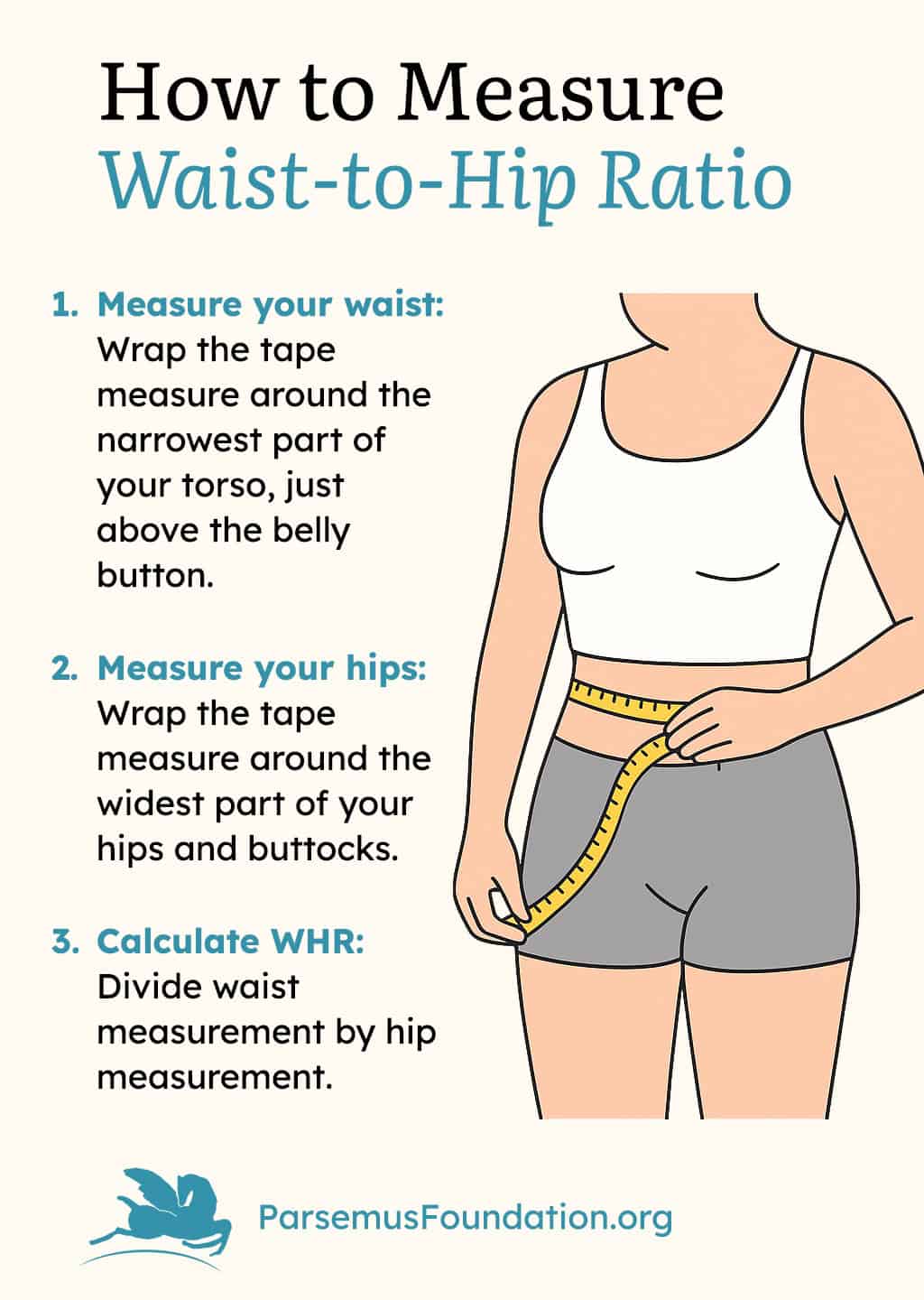
The waist-to-hip ratio (WHR) compares the circumference of your waist to that of your hips.
It measures fat distribution rather than overall body size. Unlike body mass index (BMI), which looks only at height and weight, WHR helps identify harmful belly fat linked to metabolic and cardiovascular disease.
- High WHR (“apple-shaped”): More fat around the abdomen
- Low WHR (“pear-shaped”): More fat around hips and thighs
A higher waist-to-hip ratio — above 0.90 for men or 0.85 for women — indicates greater health risk, even for people with a normal BMI.
Diet quality and brain connectivity
The study used the Alternative Healthy Eating Index (AHEI-2010) to measure diet quality.
Higher scores reflected more fruits, vegetables, whole grains, and healthy fats — and less processed meat, sugar, and refined carbs.
Participants who improved their diet over time showed better white matter integrity, a marker of brain connectivity. Those with poorer diets or higher waist-to-hip ratios showed signs of weaker brain structure and function.
These results suggest that improving diet in midlife — rather than only focusing on weight loss — can help maintain brain health.
Why this matters: the global obesity pandemic
The study’s findings come amid what experts call the “global obesity pandemic.”
According to an invited editorial in JAMA, about 43% of adults and 20% of children worldwide are overweight, and those numbers are rising.
Poor diet and excess abdominal fat contribute not just to diabetes and heart disease, but also to declining brain health.
The editorial emphasized that integrating dietary guidelines into public health policies is crucial to protect brain function on a population level.
Previous research has shown that visceral fat (which is stored deep inside the abdominal cavity, and appears as belly fat) is linked to smaller brain volumes, worse white-matter integrity, and poorer cognition. For more information, check out these studies:
- Moran C, Herson J, Than S, et al. Interactions between age, sex and visceral adipose tissue on brain ageing. Diabetes Obes Metab. 2024;26(9):3821-3829. doi:10.1111/dom.15727
- Golan Shekhtman S, Boccara E, Ravona-Springer R, et al. Abdominal fat depots are related to lower cognitive functioning and brain volumes in middle-aged males at high Alzheimer’s risk. Obesity (Silver Spring). 2024;32(5):1009-1022. doi:10.1002/oby.24004
- Raji CA, Meysami S, Hashemi S, et al. Visceral and Subcutaneous Abdominal Fat Predict Brain Volume Loss at Midlife in 10,001 Individuals. Aging Dis. 2024;15(4):1831-1842. Published 2024 Aug 1. doi:10.14336/AD.2023.0820
Limitations to keep in mind
Like most studies, Dr. Jensen’s study had some limitations:
- Dietary information came from self-reported food frequency questionnaires, which can contain errors.
- Most participants were white British men with higher education levels, so the results may not apply to everyone. Because men usually have more visceral fat and women usually have more subcutaneous fat (which is stored just under the skin) and naturally have wider hips, the impact of waist-to-hip ratio on brain function may be different for men and women.
- Future studies need to include more women and more diverse populations.
Still, the study’s long follow-up period and detailed brain imaging make it one of the strongest investigations yet linking waist-to-hip ratio, diet, and brain health.
How to reduce your risk of dementia
You don’t need to overhaul your entire lifestyle overnight. You can take simple steps to reduce the risk of developing dementia. They include a heart-healthy diet, physical activity, social interaction, and addressing hearing or vision loss.
The Lancet Commission on dementia prevention, intervention, and care issued a helpful report that lists 14 modifiable risk factors. Use it as a guide to making changes that can preserve your brain health!
Keep in mind:
- Small changes in diet quality — more fruits, vegetables, and whole grains; less added sugar and processed food — can make a real difference in supporting brain health as we age.
- Waist-to-hip ratio is a stronger predictor of brain and metabolic health than BMI alone.
- Midlife habits — especially diet and fat distribution — shape how your brain functions later in life.
Also, see our web pages about Alzheimer’s Disease prevention for more in-depth information on:
- Lithium for Alzheimer’s Disease Prevention (recent studies indicate that even trace amounts of lithium salts may have positive effects on the brain)
- Testosterone and Fish Oil for Alzheimer’s Disease Prevention (these supplements can reduce the risk of developing memory problems and Alzheimer’s disease)
- Hearing, Hearing Aids, and Dementia (hearing loss is one of the risk factors for dementia)