
A groundbreaking 2026 study published in the Journal of Small Animal Practice sheds new light on the timing of dog sterilization and joint health. Analyzing data from over 20,000 dogs, researchers found that traditional “early neutering” cutoffs of 18-24 months may not protect your dog from cranial cruciate ligament (CCL) disease—similar to an ACL tear in humans. The data suggests keeping hormones intact until at least 2.9 years for female dogs and 2.2 years for male dogs.
Why hormones matter for joint health
When making decisions about pet sterilization, many owners ask: When is the right time to spay or neuter my dog?
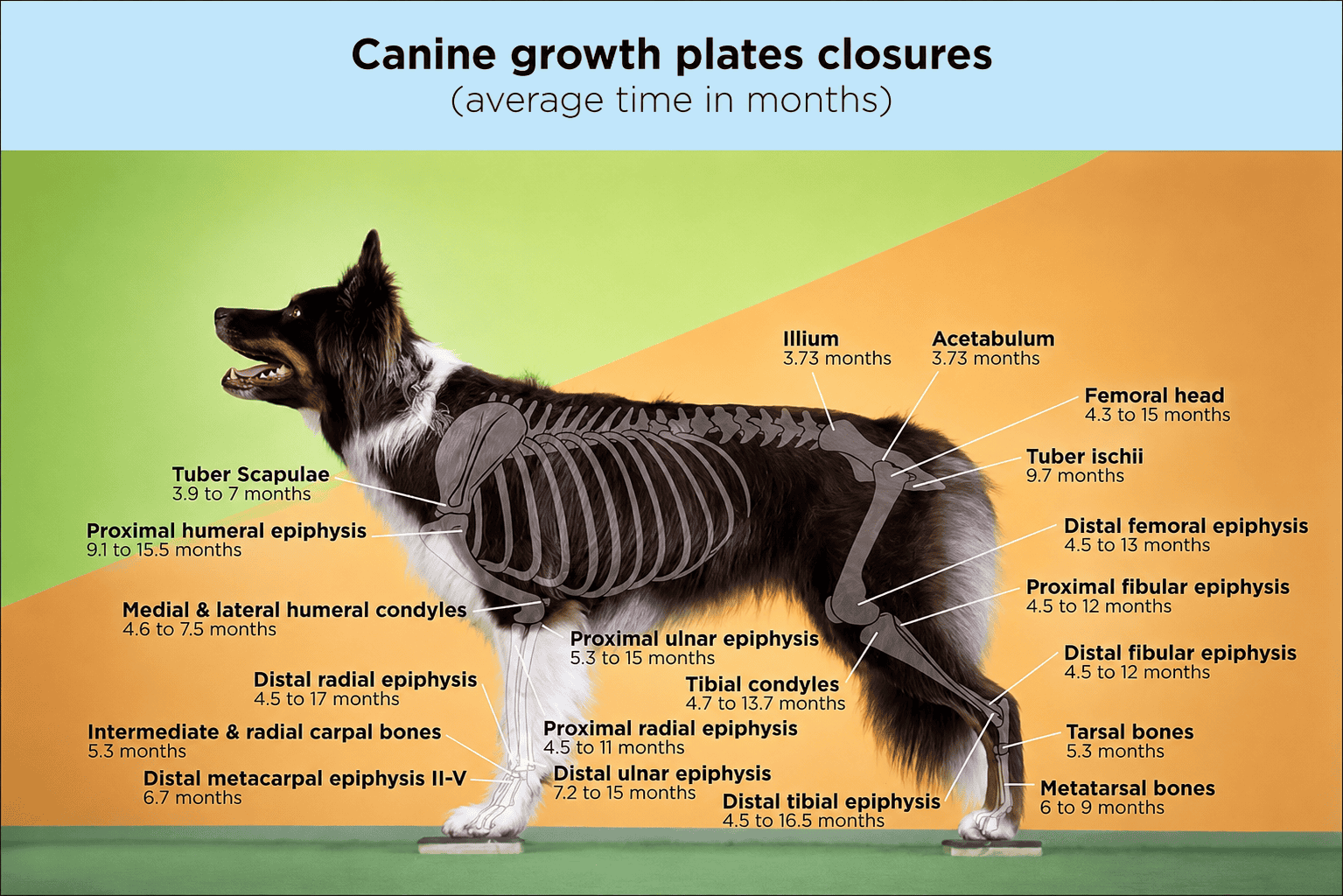
We previously explored how removing gonadal hormones impacts a dog’s physical development in our article Spay, Neuter and the Risk of a Torn Ligament in Dogs. Traditional spaying and neutering (gonadectomy) stops the production of essential sex hormones like estrogen and testosterone. These hormones do more than control reproduction. They act as critical biological signals that tell bones when to stop growing.
Without these hormones, bones grow longer than intended. This alters your dog’s skeletal conformation and changes the angles of their joints, leaving them vulnerable to painful injuries.
Our prior article highlighted that neutered dogs face a significantly higher risk of tearing their cranial cruciate ligament (CCL)—the canine equivalent of an ACL tear. Now, a massive new study expands our understanding of this timeline. It shows that typical veterinary advice to wait to neuter until one or two years of age may still leave your dog at risk.
Courtesy of Dogs4Motion Academy
What makes this new study unique
Published in the Journal of Small Animal Practice, the study by veterinarian Dr. Daniel Low examined how exposure to gonadal hormones was related to the risk of CCL disease in dogs. Instead of grouping dogs into rigid, arbitrary age categories (like neutered “under 6 months” or “over 1 year”), the research used advanced statistical modeling to track hormone exposure as a continuous timeline.
- Large data pool: Dr. Low analyzed a retrospective cohort of 20,590 dogs (9,845 females and 10,745 males) spanning 36 years (1988–2023). The dataset was compiled from three studies completed by Hart and colleagues at the University of California.
- Continuous tracking: The study measured cumulative gonadal hormone exposure based on the exact age at which the dog was sterilized.
- Statistical modeling: He utilized generalized additive models to isolate the relationship between hormone exposure and ligament tears while adjusting for confounding variables.
Cranial cruciate ligament tears and age at neuter
The study’s findings offer a clear understanding of the risk of CCL tears for dogs neutered at various ages.
- The overall prevalence: Within the dataset, 2.49% of female dogs and 1.89% of male dogs developed CCL disease. It was more common in dogs with hip or elbow dysplasia and in some giant breeds.
- A nonlinear risk pattern: The risk of a cruciate ligament tear was nonlinearly associated with the age of sterilization. This means that the graph of the relationship between the two factors forms a curved line rather than a straight one. An increase in hormone exposure causes inconsistent or disproportionate changes in CCL disease risk. Dogs with the shortest hormone exposure (earliest neutering) faced the highest risk of injury.
- Redefining “early” neutering: The risk of ligament tears dropped sharply the longer hormones remained intact, reaching a statistical minimum at specific ages.
You can see this relationship in the graphs below, which demonstrate how delaying spaying or neutering steeply drops the risk of CCL disease. The study pinpointed the minimum risk for joint injury when dogs were spayed or neutered at:
- 2.9 years (1,054 days) for female dogs
- 2.2 years (805 days) for male dogs
According to this study, to protect cruciate ligament health, you should not spay female dogs before 2.9 years or neuter male dogs before 2.2 years.
You can see on the graphs that the risk of CCL tear fluctuates when dogs are neutered later. The author noted that the data for older dogs was more difficult to evaluate. Only a small number of dogs were neutered when older, and this was sometimes done as part of treatment for other disorders.

What this means for dog owners
This research changes the conversation about pet health and development. It proves that traditional arbitrary ages for the best time for spaying and neutering are not fully grounded in science. It also supports the importance of natural hormones for lifelong health, as has been found in other recent research.
If you are a dog owner navigating these choices, consider the following evidence-based steps:
- Prioritize musculoskeletal maturity: Ensure your dog retains their natural hormones until their skeletal system fully matures. For optimal joint health, consider waiting until your male dog is at least 2.2 years old and your female dog is at least 2.9 years old.
- Evaluate individual risk factors: Work with your veterinarian to assess your dog’s specific breed, size, and lifestyle. Large and giant breeds are inherently more prone to orthopedic issues and benefit immensely from prolonged hormone exposure.
- Explore hormone-sparing alternatives: If you want to prevent unwanted reproduction early but protect your dog’s joints, look into hormone-sparing sterilization procedures. Procedures like an ovary-sparing spay (OSS) or a vasectomy prevent pregnancy while keeping essential health-protecting hormones intact. Learn more about hormone-sparing sterilization and check out our Veterinary Directory to find veterinarians who offer these procedures.
Every dog is unique. By moving away from one-size-fits-all timelines and understanding the protective power of natural hormones, we can make safer, healthier choices for our pets.